DC Comics
| Name | DC Comics |
| Image |  |
| Caption | Logo used since 2024 |
| Status | Active |
| Country | United States |
| Headquarters | 4000 Warner Boulevard, Burbank, California |
| Publications | List of publications |
| Numemployees | approx. 230 |
| Genre | |
| Imprints | List of imprints |
| Website | https://dc.com/ |
DC Comics (originally DC Comics, Inc., and also known simply as DC) is an American comic book publisher owned by Warner Bros. Discovery. DC is an initialism for Detective Comics, a comic book series first published in 1937. DC Comics is one of the largest and oldest American comic book companies, the first comic under the DC banner being published in 1937.
The majority of its published stories are set in the fictional DC Universe and feature numerous culturally iconic heroic characters, such as Superman, Batman, Wonder Woman, and the Flash; as well as famous fictional teams, including the Justice League, the Teen Titans, the Suicide Squad, and the Legion of Super-Heroes. The universe contains an assortment of well-known supervillains, such as Lex Luthor, the Joker, Darkseid, and the antiheroic Catwoman. The company has published non-DC Universe-related material, including Watchmen, V for Vendetta, Fables, and many other titles, under the alternative imprint Vertigo and DC Black Label.
Originally at 432 Fourth Avenue in Manhattan, New York City, the company offices have been located at 480 and later 575 Lexington Avenue, 909 Third Avenue, 75 Rockefeller Plaza, 666 Fifth Avenue, and 1325 Avenue of the Americas. DC Comics was located at 1700 Broadway in Midtown Manhattan until April 2015, when DC Entertainment transferred its headquarters to Burbank, California.
In 2017, approximately 70% of the American comic book market was shared by DC Comics and its long-time major competitor Marvel Comics, though this figure may be distorted by the fact that sales of graphic novels are excluded. When all book sales are included, DC is the second largest publisher of comic books, after Viz Media, and Marvel is third.
History
National Allied Publications
Golden Age
Golden Age of Comic Books.jpg)
In 1935, entrepreneur Major Malcolm Wheeler-Nicholson founded National Allied Publications, intended as an American comic book publishing company. Its debut publication was the tabloid-sized New Fun: The Big Comic Magazine #1 (the first of a comic series later called More Fun Comics) with a February 1935 cover date. An anthology title, essentially for original stories not reprinted from newspaper strips, it was unlike many comic book series before it. While DC Comics is now primarily associated with superhero comics, the genres in the first anthology titles consisted of funnies, Western comics, and adventure-related stories. The character Doctor Occult—created by Jerry Siegel and Joe Shuster in December 1935 and included in issue No.6 of New Fun Comics—is considered to be the earliest recurring superhero created by DC that is still being used. The company created a second recurring title called New Comics, first released in December 1935, which was the start of the long-running Adventure Comics series that also featured many anthology titles. By 1936, the group had become Nicholson Publishing.
Wheeler-Nicholson's next and final title, Detective Comics, was advertised with a cover illustration dated December 1936 but eventually premiered three months late with a March 1937 cover date. The themed anthology that revolved originally around fictional detective stories became in modern times the longest-running ongoing comic series. A notable debut in the first issue was Slam Bradley, created in a collaboration between Wheeler-Nicholson, Siegel and Shuster. In 1937, in debt to printing-plant owner and magazine distributor Harry Donenfeld—who also published pulp magazines and operated as a principal in the magazine distributorship Independent News—Wheeler-Nicholson had to enter into partnership with Donenfeld to publish Detective Comics No.1, and Detective Comics, Inc. (which helped inspire the abbreviation DC) was formed, with Wheeler-Nicholson and Donenfeld's accountant Jack S. Liebowitz listed as owners. As the company continued to experience cash-flow problems, Wheeler-Nicholson was forced out after the first year. Shortly afterwards, Detective Comics, Inc. purchased the remains of National Allied (also known as Nicholson Publishing) at a bankruptcy auction and absorbed it..png)

Meanwhile, Max Gaines formed the sister company All-American Publications in 1939. Detective Comics, Inc. soon launched a new anthology title called Action Comics; the first issue, cover dated June 1938, featured new characters such as Superman by Siegel and Shuster, Zatara by Fred Guardineer, and Tex Thompson by Ken Finch and Bernard Baily. Considered as the first comic book to feature the character archetype later known as the "superhero", Action Comics was a sales hit that brought to life a new age of comic books, now affectionately termed the "Golden Age". Action Comics #1 is credited as featuring the first appearance of Superman, both on the cover illustration and inside the issue, and is now one of the most valuable and sought-after comic book issues of all time. The first Superman tale included a superhero origin story with the reveal of an unnamed planet, later known as Krypton, where he is said to have originated. The issue also contained the first essential supporting character and one of the earliest female characters in any comic, with Lois Lane as Superman's first depicted romantic interest. The Green Hornet-inspired character known as the Crimson Avenger by Jim Chamber was featured in Detective Comics No.20 (October 1938). This character is known to be the first masked vigilante published by DC. An unnamed "office boy", retconned as Jimmy Olsen's first appearance, was revealed in a Superman story by Siegel and Shuster in Action Comics No.6 (November 1938).
Starting in 1939, Siegel and Shuster's Superman was the first comic-derived character to appear in other formats, later featuring in his own newspaper comic strip, which first introduced his biological parents Jor-El and Lara. All-American Publications' debut comic series, All-American Comics, was first published in April 1939. The series Detective Comics made history as being the first to feature Batman—a Bob Kane and Bill Finger creation—in issue No.27 (March 1939) with the request of more superhero titles. Batman was depicted as a masked vigilante who wore a caped suit known as the Batsuit and drove a car that was later referred to as the Batmobile. The Batman story also included a supporting character called James Gordon, the police commissioner of what would later become Gotham City Police Department. Despite being a parody, All-American Publications introduced the earliest female character who became the female superhero Red Tornado (though disguised as a male) in Ma Hunkel who first appeared in the "Scribbly" stories in All-American Comics No.3 (June 1939). Another important Batman debut was the introduction of the fictional mansion known as Wayne Manor first seen in Detective Comics No.28 (June 1939). The series Adventure Comics followed in the footsteps of Action Comics and Detective Comics by featuring a new recurring superhero called Sandman who first appeared in Adventure Comics No.40 (July 1939). Action Comics No.13 (June 1939) introduced the first recurring Superman enemy referred to as the Ultra-Humanite; created by Siegel and Shuster, this is commonly cited as one of the earliest supervillains in comic books. The Superman character had another breakthrough when he was given his own comic book series, which was previously unheard of. The first issue, published in June 1939, helped directly introduce Superman's adoptive parents, Jonathan and Martha Kent, also created by Siegel and Shuster. Detective Comics No.29 (July 1939) included the first mention of Batman's utility belt by Gardner Fox. Outside of DC's publishing, a character later integrated as DC was introduced by Fox Feature Syndicate named the Blue Beetle released in August 1939. Fictional cities were a common theme of DC; the first revealed city was Superman's home city of Metropolis, originally named in Action Comics No.16 (September 1939). Detective Comics No.31 (September 1939) by Gardner Fox, Bob Kane and Sheldon Moldoff introduced a romantic interest for Batman named Julie Madison, as well as the Batarang weapon that Batman commonly uses, and the fictional aircraft called the Batplane. The story of Batman's origin was first shown in Detective Comics No.33 (November 1939), which depicted the death of Thomas Wayne and Martha Wayne by a mugger. The origin story remained crucial for the fictional character after its inception.
The Daily Planet (a common setting of Superman) was first named in a Superman newspaper strip around November 1939. Doll Man was the first superhero to be produced by Quality Comics, which DC now owns. Fawcett Comics was formed around 1939 and became DC's original competitor company over the next decade. At the end of 1944, All-American titles began using its own logo to distinguish it from the National comics.
All-American Publications, an affiliate concern co-owned by Gaines and Liebowitz, merged with Detective Comics, Inc. on September 30, 1946, forming National Comics Publications. The previous year, in June 1945, Gaines had allowed Liebowitz to buy him out and had retained only Picture Stories from the Bible as the foundation of his own new company, EC Comics. At that point, "Liebowitz promptly orchestrated the merger of All-American and Detective Comics into National Comics... Next he took charge of organizing National Comics, self-distributorship Independent News, and their affiliated firms into a single corporate entity, National Periodical Publications". National Periodical Publications became publicly traded on the stock market in 1961. Despite the official names "National Comics" and "National Periodical Publications", the company began branding itself as "Superman-DC" as early as 1940 and became known colloquially as DC Comics for years before the official adoption of that name in 1977.
DC Comics began to move aggressively against what it saw as copyright-violating imitations from other companies, such as Fox Comics' Wonder Man, which (according to court testimony) Fox started as a copy of Superman. This extended to DC suing Fawcett Comics over Captain Marvel, who was at the time the top-selling comic character (see National Comics Publications, Inc. v. Fawcett Publications, Inc.). Faced with declining sales and the prospect of bankruptcy if it lost the lawsuit, Fawcett capitulated in 1953 and ceased publishing comics. Years later, Fawcett sold the rights for Captain Marvel to DC Comics, and in 1972 the character was revived in DC's new title Shazam!, which featured artwork by Captain Marvel's creator C. C. Beck. In the meantime, the abandoned 'Marvel' trademark had been seized by Marvel Comics in 1967, with the creation of their Captain Marvel, preventing DC from using the name in the title of their own comic series. While DC's Captain Marvel failed to recapture his earlier popularity, he later appeared in a Saturday morning live action TV adaptation and gained a prominent position in the mainstream continuity of the DC Universe.
As the popularity of superheroes faded in the late 1940s, DC Comics focused on such genres as science fiction, Westerns, humor, and romance. The company also published crime and horror titles, although relatively tame contributions that avoided the mid-1950s backlash against such comic genres. A handful of the most popular superhero titles continued publication, including Action Comics and Detective Comics, the medium's two longest-running titles.
| Pioneers of DC Comics who started in the 1930s | ||||||
|---|---|---|---|---|---|---|
 |  | 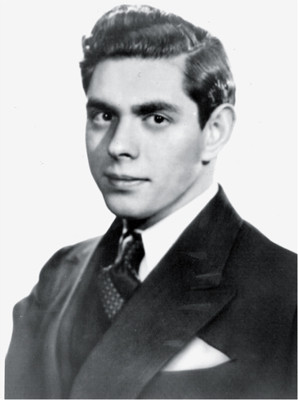 | 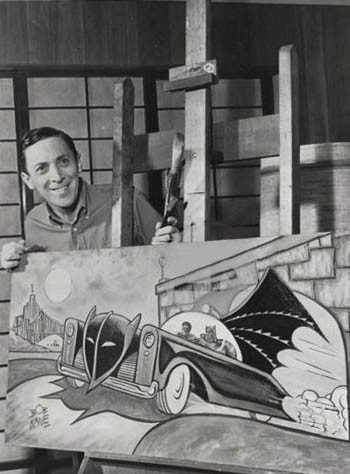 |  |  | |
| Malcolm Wheeler-Nicholson | Jerry Siegel | Joe Shuster | Bob Kane | Bill Finger | Sheldon Mayer | Gardner Fox |
| Founder of DC Comics | Creators of Superman and Lois Lane | Creators of Batman and the Joker | Early founder | Created various characters | ||
Silver Age
Silver Age of Comic Books
In the mid-1950s, editorial director Irwin Donenfeld and publisher Liebowitz directed editor Julius Schwartz (whose roots lay in the science-fiction book market) to produce a one-shot Flash story in the try-out title Showcase. Instead of reviving the old character, Schwartz had writers Robert Kanigher and John Broome, penciler Carmine Infantino, and inker Joe Kubert create Barry Allen, an entirely new super-speedster with a science-fiction bent. The Flash's reimagining in Showcase #4 (October 1956) proved sufficiently popular that it soon led to a similar revamping of the Green Lantern character, the introduction of the modern all-star team Justice League of America (JLA), and many more superheroes, heralding what historians and fans call the Silver Age of Comic Books.
National radically overhauled its continuing characters—primarily Superman, Batman, and Wonder Woman—rather than just reimagining them. The Superman family of titles, under editor Mort Weisinger, introduced such enduring characters as Supergirl, Bizarro, and Brainiac. The Batman titles, under editor Jack Schiff, introduced the successful Batwoman, Bat-Girl, Ace the Bat-Hound, and Bat-Mite in an attempt to modernize the strip with non-science-fiction elements. Schwartz and Infantino revitalized Batman in what the company promoted as the "New Look", with relatively down-to-earth stories re-emphasizing Batman as a detective. Meanwhile, editor Kanigher successfully introduced a whole family of Wonder Woman characters having fantastic adventures in a mythical realm.
Since the 1940s, when Superman, Batman, and many of the company's other heroes began appearing in stories together, DC's characters have inhabited a shared continuity that was later dubbed the "DC Universe" by fans. With the story "Flash of Two Worlds", in Flash #123 (September 1961), editor Schwartz (with writer Gardner Fox and artists Infantino and Joe Giella) presented a conceptual mechanism for slotting the 1930s and 1940s Golden Age heroes into this continuity using the explanation that they inhabited an other-dimensional "Earth 2", whilst the modern heroes exist on "Earth 1", consequently laying the foundations of what was later called the DC Multiverse.
National Periodical Publications
DC's introduction of the reimagined superheroes did not go unnoticed by their competitors. In 1961, with DC's JLA as the specific inducement, Marvel Comics' writer-editor Stan Lee and artist Jack Kirby ushered in the sub-Silver Age "Marvel Age" of comics with the debut issue of The Fantastic Four. Reportedly, DC dismissed the initial success of Marvel's editorial change until its consistently strengthening sales—albeit also benefiting DC's parent company Independent News, as Marvel's distributor—made it impossible to ignore. This commercial situation was highlighted by Marvel's superior sell-through percentage numbers which were typically 70% to DC's roughly 50%, meaning that DC's publications were barely making a profit after returns from the distributors were factored in, while Marvel was making a healthy profit by comparison. Also in 1961, both DC and Marvel increased their cover price from ten cents to twelve cents, while the rival publisher Dell Comics was charging fifteen cents.
At this time, the senior DC staff were reportedly unable to explain how this small publishing house was achieving its increasingly threatening commercial strength. For instance, when Marvel's product was examined in a meeting, the emphasis on more sophisticated character-based narrative and artist-driven visual storytelling was apparently overlooked. Instead, superficial reasons were put forward to account for the brand's popularity, like the presence of the color red or word balloons on the cover, or that the perceived crudeness of the interior art was somehow more appealing to readers. When Lee learned about DC's subsequent experimental attempts to imitate these perceived details, he amused himself by arranging direct defiance of those assumptions in Marvel's publications as sales strengthened further to frustrate the competition.
However, this ignorance of Marvel's true appeal did not extend to some of the writing talent during this period, and attempts were made to emulate Marvel's narrative approach. For instance, there was the Doom Patrol series by Arnold Drake (who had previously warned DC's management about Marvel's strength), a superhero team of outsiders who resented their freakish powers, which Drake later speculated was plagiarized by Stan Lee to create The X-Men. There was also the young Jim Shooter who purposely emulated Marvel's writing when he wrote for DC after studying both companies' styles, such as for the Legion of Super-Heroes feature. In 1966, National Periodical Publications established its own television arm, led by Allen Ducovny, to develop and produce TV projects, with Superman TV Corporation handling the distribution of NPP's shows.
A 1966 Batman TV show on the ABC network sparked a temporary spike in comic book sales and a brief fad for superheroes in Saturday morning animation (Filmation produced most of DC's initial cartoons) and other media. DC significantly lightened the tone of many of its comics—particularly Batman and Detective Comics—to better complement the "camp" tone of the TV series. This change in tone coincided with the prominent "Go-Go Checks" cover-dress that featured a black-and-white checkered strip at the top of each DC comic (all cover dates between February 1966 and August 1967), a misguided attempt by then-managing editor Irwin Donenfeld to make DC's output "stand out on the newsracks". In particular, DC artist Carmine Infantino complained that the distinctive cover made it easier for readers to spot DC's titles and avoid them in favor of Marvel's titles.
In 1967, Infantino (who had designed popular Silver Age characters Batgirl and the Phantom Stranger) rose from art director to become DC's editorial director. With the growing popularity of upstart rival Marvel Comics threatening to topple DC from its longtime number-one position in the comics industry, he tried to direct DC's focus towards marketing new and existing titles and characters with more adult sensibilities, aimed at an emerging older age group of superhero comic book fans; this was in response to Marvel's efforts to market their superhero line to college-aged adults. Infantino also recruited major talents such as ex-Marvel artist and Spider-Man co-creator Steve Ditko, and promising newcomers Neal Adams and Denny O'Neil, and he replaced some existing DC editors with artist-editors, including Joe Kubert and Dick Giordano, to give DC's output a more artistic critical eye.
Kinney National / Warner Communications (1967–1990)
In 1967, National Periodical Publications was purchased by Kinney National Company, which purchased Warner Bros.-Seven Arts in 1969. Kinney National spun off its non-entertainment assets in 1972 (as National Kinney Corporation) and changed its name to Warner Communications Inc.
In 1970, Jack Kirby moved from Marvel Comics to DC, at the end of the Silver Age of Comics, in which Kirby's contributions to Marvel played a large, integral role.
As artist Gil Kane described: "Jack was the single most influential figure in the turnaround in Marvel's fortunes from the time he rejoined the company ... It wasn't merely that Jack conceived most of the characters that are being done, but ... Jack's point of view and philosophy of drawing became the governing philosophy of the entire publishing company and, beyond the publishing company, of the entire field ... took Jack and used him as a primer. They would get artists ... and they taught them the ABCs, which amounted to learning Jack Kirby ... Jack was like the Holy Scripture and they simply had to follow him without deviation. That's what was told to me ... It was how they taught everyone to reconcile all those opposing attitudes to one single master point of view."
Given carte blanche to write and illustrate his own stories, he created a handful of thematically-linked series he called collectively "The Fourth World". In the existing series Superman's Pal Jimmy Olsen and in his own, newly-launched series New Gods, Mister Miracle, and The Forever People, Kirby introduced such enduring characters and concepts as arch-villain Darkseid and the other-dimensional realm Apokolips. Furthermore, Kirby intended their stories to be reprinted in collected editions, in a publishing format that was later called the trade paperback, which became a standard industry practice decades later. While sales were respectable, they did not meet DC management's initially high expectations, and also suffered from a lack of comprehension and internal support from Infantino. By 1973 the "Fourth World" was all cancelled, although Kirby's conceptions soon became integral to the broadening of the DC Universe, especially after the major toy-company, Kenner Products, judged them ideal for their action-figure adaptation of the DC Universe, the Super Powers Collection. Obligated by his contract, Kirby created other unrelated series for DC, including Kamandi, The Demon, and OMAC, before ultimately returning to Marvel Comics in 1976.
Bronze Age
Bronze Age of Comic Books
Following the science-fiction innovations of the Silver Age, the comics of the 1970s and 1980s became known as the Bronze Age, as fantasy gave way to more naturalistic and sometimes darker themes. Illegal drug use, banned by the Comics Code Authority, explicitly appeared in comics for the first time in Marvel Comics' story "Green Goblin Reborn!" in The Amazing Spider-Man #96 (May 1971), and after the Code's updating in response, DC offered a drug-fueled storyline in writer Dennis O'Neil and artist Neal Adams' Green Lantern, beginning with the story "Snowbirds Don't Fly" in the retitled Green Lantern/Green Arrow #85 (September 1971), which depicted Speedy, the teen sidekick of superhero archer Green Arrow, as having become a heroin addict.
Jenette Kahn, a former children's magazine publisher, replaced Infantino as editorial director in January 1976. As it happened, her first task even before being formally hired, was to convince Bill Sarnoff, the head of Warner Publishing, to keep DC as a publishing concern, as opposed to simply managing their licensing of their properties. With that established, DC had attempted to compete with the now-surging Marvel by dramatically increasing its output and attempting to win the market by flooding it. This included launching series featuring such new characters as Firestorm and Shade, the Changing Man, as well as an increasing array of non-superhero titles, in an attempt to recapture the pre-Wertham days of post-War comicdom.
DC Comics
In 1977, the company officially changed its name to DC Comics. It had used the brand "Superman-DC" since the 1950s, and was colloquially known as DC Comics for years.
In June 1978, five months before the release of the first Superman film, Kahn expanded the line further, increasing the number of titles and story pages, and raising the price from 35 cents to 50 cents. Most series received eight-page back-up features while some had full-length twenty-five-page stories. This was a move the company called the "DC Explosion". The move was not successful, however, and corporate parent Warner dramatically cut back on these largely unsuccessful titles, firing many staffers in what industry watchers dubbed "the DC Implosion". In September 1978, the line was dramatically reduced and standard-size books returned to 17-page stories but for a still increased 40 cents. By 1980, the books returned to 50 cents with a 25-page story count but the story pages replaced house ads in the books.
Seeking new ways to boost market share, the new team of publisher Kahn, vice president Paul Levitz, and managing editor Giordano addressed the issue of talent instability. To that end—and following the example of Atlas/Seaboard Comics and such independent companies as Eclipse Comics—DC began to offer royalties in place of the industry-standard work-for-hire agreement in which creators worked for a flat fee and signed away all rights, giving talent a financial incentive tied to the success of their work. As it happened, the implementation of these incentives proved opportune considering Marvel Comics' Editor-in-Chief, Jim Shooter, was alienating much of his company's creative staff with his authoritarian manner and major talents there went to DC like Roy Thomas, Gene Colan, Marv Wolfman, and George Pérez.
In addition, emulating the era's new television form, the miniseries while addressing the matter of an excessive number of ongoing titles fizzling out within a few issues of their start, DC created the industry concept of the comic book limited series. This publishing format allowed for the deliberate creation of finite storylines within a more flexible publishing format that could showcase creations without forcing the talent into unsustainable open-ended commitments. The first such title was World of Krypton in 1979, and its positive results led to subsequent similar titles and later more ambitious productions like Camelot 3000 for the direct market in 1982.
These changes in policy shaped the future of the medium as a whole, and in the short term allowed DC to entice creators away from rival Marvel, and encourage stability on individual titles. In November 1980 DC launched the ongoing series The New Teen Titans, by writer Marv Wolfman and artist George Pérez, two popular talents with a history of success. Their superhero-team comic, superficially similar to Marvel's ensemble series X-Men, but rooted in DC history, earned significant sales in part due to the stability of the creative team, who both continued with the title for six full years. In addition, Wolfman and Pérez took advantage of the limited-series option to create a spin-off title, Tales of the New Teen Titans, to present origin stories of their original characters without having to break the narrative flow of the main series or oblige them to double their work load with another ongoing title.
Modern Age
Modern Age of Comic Books
This successful revitalization of the Silver Age Teen Titans led DC's editors to seek the same for the wider DC Universe. The result, the Wolfman/Pérez 12-issue limited series Crisis on Infinite Earths, gave the company an opportunity to realign and jettison some of the characters' complicated backstory and continuity discrepancies. A companion publication, two volumes entitled The History of the DC Universe, set out the revised history of the major DC characters. Crisis featured many key deaths that shaped the DC Universe for the following decades, and it separated the timeline of DC publications into pre- and post-"Crisis".
Meanwhile, a parallel update had started in the non-superhero and horror titles. Since early 1984, the work of British writer Alan Moore had revitalized the horror series The Saga of the Swamp Thing, and soon numerous British writers, including Neil Gaiman and Grant Morrison, began freelancing for the company. The resulting influx of sophisticated horror-fantasy material led to DC in 1993 establishing the Vertigo mature-readers imprint, which did not subscribe to the Comics Code Authority.
Two DC limited series, Batman: The Dark Knight Returns by Frank Miller and Watchmen by Moore and artist Dave Gibbons, drew attention in the mainstream press for their dark psychological complexity and promotion of the antihero. These titles helped pave the way for comics to be more widely accepted in literary-criticism circles and to make inroads into the book industry, with collected editions of these series as commercially successful trade paperbacks.
The mid-1980s also saw the end of many long-running DC war comics, including series that had been in print since the 1960s. These titles, all with over 100 issues, included Sgt. Rock, G.I. Combat, The Unknown Soldier, and Weird War Tales.
Time Warner / Time Warner Entertainment / AOL Time Warner (1990–2018)
In March 1989, Warner Communications merged with Time Inc., making DC Comics a subsidiary of Time Warner. In June, the first Tim Burton-directed Batman film was released, and DC began publishing its hardcover series of DC Archive Editions; these were collections of many of their early, key comics series, featuring rare and expensive stories previously unseen by the majority of modern fans. Much of the restoration work was handled by Rick Keene, with colour restoration performed by DC's long-time resident colourist Bob LeRose. The Archive Editions attempted to retroactively credit many of the writers and artists who had worked for DC without receiving much recognition during the early age of comic books when individual credits were rare.
The comics industry experienced a brief boom in the early 1990s, thanks to a combination of speculative purchasing—mass purchase of the books as collectible items, with the intention to resell at a higher value (as the rising value of older issues was thought to imply that all comics would rise dramatically in price)—and several storylines gaining attention from the mainstream media. DC's extended storylines in which Superman was killed, Batman was crippled, and Green Lantern turned into the supervillain Parallax, resulted in dramatically increased sales. However, the increases were temporary, and sales dropped off as the industry went into a major slump, while manufactured "collectables" numbering in the millions replaced quality with quantity until fans and speculators alike deserted the medium in droves.
DC's Piranha Press and other imprints (including the mature readers' line Vertigo, and Helix, a short-lived science fiction imprint) were introduced to facilitate compartmentalized diversification and allow for specialized marketing of individual product lines. They increased the use of non-traditional contractual arrangements, including the dramatic rise of creator-owned projects, leading to a significant increase in critically lauded work (much of it for Vertigo) and the licensing of material from other companies. DC also increased publication of book-store friendly formats, including trade paperback collections of individual serial comics, as well as original graphic novels.
One of the other imprints was Impact Comics from 1991 to 1992 in which the Archie Comics superheroes were licensed and revamped. The stories in the line were part of its own shared universe.
DC entered into a publishing agreement with Milestone Media that gave DC a line of comics featuring a culturally and racially diverse range of superhero characters. Although the Milestone line ceased publication after a few years, it yielded the popular animated series Static Shock. DC established Paradox Press to publish material such as the large-format Big Book of... series of multi-artist interpretations on individual themes, and such crime fiction as the graphic novel Road to Perdition. In 1998, DC purchased WildStorm Comics, Jim Lee's imprint under the Image Comics banner, continuing it for many years as a wholly separate imprint (and fictional universe) with its own unique style and audience. As part of this purchase, DC also began to publish titles under the fledgling WildStorm sub-imprint America's Best Comics (ABC), a series of titles created by Alan Moore which included The League of Extraordinary Gentlemen, Tom Strong, and Promethea. Moore strongly opposed this move, and DC eventually stopped publishing ABC.
In March 2003, DC acquired publishing and merchandising rights to the long-running fantasy series Elfquest, previously self-published by creators Wendy and Richard Pini under their WaRP Graphics publication banner. This series then followed another non-DC title, Tower Comics' series T.H.U.N.D.E.R. Agents, in collection into DC Archive Editions. In 2004, DC temporarily acquired the North American publishing rights to graphic novels from European publishers 2000 AD and Humanoids. It also rebranded its younger-audience titles with the mascot Johnny DC and established the CMX imprint to reprint translated manga. In 2006, CMX took over from Dark Horse Comics' publication of the webcomic Megatokyo in print form. DC also took advantage of the demise of Kitchen Sink Press and acquired the rights to much of the work of Will Eisner, such as his The Spirit series and his graphic novels.
In 2004, DC began laying the groundwork for a full continuity-reshuffling sequel to Crisis on Infinite Earths, promising substantial changes to the DC Universe (and side-stepping the 1994 Zero Hour: Crisis in Time! event, which similarly tried to retcon the history of the DCU). In 2005, the critically lauded Batman Begins film was released; also, the company published several limited series establishing increasingly escalating conflicts among DC's heroes, with events climaxing in the Infinite Crisis limited series. Immediately after this event, DC's ongoing series jumped forward a full year in their in-story continuity, as DC launched a weekly series, 52, to gradually fill in the missing time. Concurrently, DC lost the copyright to "Superboy" (while retaining the trademark) when the heirs of Jerry Siegel used a provision of the 1976 revision to the copyright law to regain ownership.
In 2005, DC launched its "All-Star" line (evoking the title of the 1940s publication), designed to feature some of the company's best-known characters in stories that eschewed the long and convoluted continuity of the DC Universe. The line began with All Star Batman & Robin, the Boy Wonder and All-Star Superman, while All-Star Wonder Woman and All-Star Batgirl were announced in 2006, but neither of these stories had been released or scheduled as of 2025.
By 2007, DC was licensing characters from the Archie Comics imprint Red Circle Comics. They appeared in the Red Circle line, based in the DC Universe, with a series of one-shots followed by a miniseries that led into two ongoing titles that each lasted for ten issues.
DC Entertainment
In 2011, DC rebooted all of its running titles following the Flashpoint storyline. The reboot called The New 52 gave new origin stories and costume designs to many of DC's characters.
DC licensed pulp characters including Doc Savage and the Spirit which it then used, along with some DC heroes, as part of the First Wave comics line launched in 2010 and lasting through fall 2011.
In May 2011, DC announced it would begin releasing digital versions of their comics on the same day as paper versions.
On June 1, 2011, DC announced that it would end all ongoing series set in the DC Universe in August and relaunch its comic line with 52 issue #1s, starting with Justice League on August 31 (written by Geoff Johns and drawn by Jim Lee), with the rest to follow later on in September.
On June 4, 2013, DC started DC2 and DC2 Multiverse. DC2 was for Batman '66 while DC2 Multiverse was for Batman: Arkham Origins.
In 2014, DC announced an eight-issue miniseries titled Convergence which began in April 2015.
In 2016, DC announced a line-wide relaunch titled DC Rebirth. The new line would launch with an 80-page one-shot titled DC Universe: Rebirth, written by Geoff Johns, with art from Gary Frank, Ethan Van Sciver, and more. After that, many new series would launch with a twice-monthly release schedule and new creative teams for nearly every title. The relaunch was meant to bring back the legacy and heart many felt had been missing from DC characters since the launch of the New 52. Rebirth brought huge success, both financially and critically.
In January 2018, DC held an event in the now-defunct Newseum in Washington D.C.. The event featured a pop-up shop with autograph opportunities, panel discussions with stars and producers from Arrow, DC's Legends of Tomorrow, The Flash, Gotham, Supergirl, and Freedom Fighters: The Ray, comic book authors and artists, and premiere screenings of Black Lightning and Batman: Gotham By Gaslight.
WarnerMedia / Warner Bros. Discovery unit (2018–present)
On February 21, 2020, the Co-Publisher of DC Comics, Dan DiDio stepped down after 10 years at that position. The company did not give a reason for the move, nor did it indicate whether it was his decision or the company's. The leadership change was the latest event in the company restructuring which began the previous month, as several top executives were laid off from the company. However, Bleeding Cool reported that he was fired.
In June 2020, Warner Bros. announced a separate DC-themed online-only convention. Known as DC FanDome, the free "immersive virtual fan experience" was a 24-hour-long event held on August 22, 2020. The main presentation, entitled "DC FanDome: Hall of Heroes", was held as scheduled on August 22. The remaining programming was provided through a one-day video on demand experience, "DC FanDome: Explore the Multiverse", on September 12.
As Warner Bros. and DC's response to San Diego Comic-Con's cancellation due to the COVID-19 pandemic, the convention featured information about DC-based content including the DC Extended Universe film franchise, the Arrowverse television franchise, comic books, and video games. The convention also returned for the virtual premiere of Wonder Woman 1984 and returned once again on October 16, 2021.
In August 2020, roughly one-third of DC's editorial ranks were laid off, including the editor-in-chief, senior story editor, executive editor, and several senior VPs.
In March 2021, DC relaunched their entire line once again under the banner of Infinite Frontier. After the events of the Dark Nights: Death Metal storyline, the DC Multiverse was expanded into a larger "Omniverse" where everything is canon, effectively reversing the changes The New 52 introduced a decade prior.
Furthermore, AT&T spun off WarnerMedia to Discovery, forming Warner Bros. Discovery. This merger was completed on April 8, 2022.
In January 2023, DC relaunched their line under the banner of Dawn of DC following the conclusion of Dark Crisis on Infinite Earths and Lazarus Planet. Later that year, Jim Lee was promoted to President of DC in May.
Logo
- The November 1941 DC titles introduced an updated logo. This was almost twice the size of the previous version and the first with a white background. The name "Superman" was added to "A DC Publication", effectively acknowledging both Superman and Batman. This logo was the first to occupy the top-left corner of the cover, which is where the logo has generally resided ever since. The company began to refer to itself in its advertising as "Superman-DC".
- When Jenette Kahn became DC's publisher in late 1976, she commissioned graphic designer Milton Glaser to design a new company logo. Popularly referred to as the "DC bullet", this logo premiered on the February 1977 titles. Although it varied in size and colour, was at times cropped by the edges of the cover, and was briefly rotated by 4degrees, the logo remained essentially unchanged for almost three decades. Despite the various logo changes since 2005, the old "DC bullet" continues to be used only on the DC Archive Editions series.
- On May 8, 2005, a new logo (dubbed the "DC spin") was unveiled, debuting on DC titles in June 2005 with DC Special: The Return of Donna Troy No.1 and the rest of the titles the following week. As well as being used for comics, the new logo was designed for DC properties in other media, including films since Batman Begins (with Superman Returns showing the logo's normal variant), the TV series Smallville, the animated series Justice League Unlimited and others, as well as for collectibles and other merchandise. The "DC Spin" logo was designed by Josh Beatman of Brainchild Studios and DC executive Richard Bruning.
- In March 2012, DC unveiled a new logo designed by Landor Associates, which consists of a letter "D" peeling back to reveal the letter "C". The logo was intended to signify the concept of superheroes having "dual" identities and was adaptable across different mediums.
- In May 2016, in conjunction with the DC Rebirth, DC replaced the "peel" logo with a circular logo reminiscent of the 1972 logo.
- In July 2024, an updated version of Glaser's 1977 "Bullet" logo was unveiled during San Diego Comic-Con, as well as an accompanying intro sequence featuring Superman for DC Studios.
Gallery

.svg)


Imprints
Active
- DC (1937–present)
- Elseworlds (1989–2010, 2024–present)
- Vertigo Comics (1993–2020, 2024–present)
- Sandman Universe (2018–present)
- WildStorm (1999–2010, 2017–present)
- Earth-M (1993–1997, 2018–present)
- DC Black Label (2018–present)
- Hill House Comics (2019–present)
- DC Graphic Novels for Young Adults (2020–present)
- DC Graphic Novels for Kids (2020–present)
- DC Horror (2021–present)
- DC Compact Comics (2024–present)
- DC All In (2024–present)
- Mad (1953–present)
Defunct
- DC Archive Editions (1989–2014; replaced by DC Omnibus)
- Piranha Press (1989–1993; renamed Paradox Press)
- Impact Comics (1991–1993; licensed from Archie Comics)
- Amalgam Comics (1996–1997; jointly with Marvel Comics)
- Helix (1996–1998; merged with Vertigo)
- Tangent Comics (1997–1998)
- Paradox Press (1998–2003)
- WildStorm Productions (1999–2010)
- America's Best Comics (1999–2005)
- Homage Comics (1999–2004; merged to form WildStorm Signature)
- Cliffhanger (1999–2004; merged to form WildStorm Signature)
- WildStorm Signature (2004–2006; merged with main WildStorm line)
- CMX Manga (2004–2010)
- DC Focus (2004–2005; merged with main DC line)
- Johnny DC (2004–2012)
- All Star (2005–2008)
- Minx (2007–2008)
- Zuda Comics (2007–2010)
- First Wave (2010–2011; licensed from Condé Nast Publications and Will Eisner Library)
- Young Animal (2016–2021)
- DC Ink (2019; replaced by DC Graphic Novels for Young Adults)
- DC Zoom (2019; replaced by DC Graphic Novels for Kids)
- Wonder Comics (2019–2021)
See also
- Batman Day
- DC Collectibles
- DC Cosmic Cards
- DC Extended Universe
- DC Studios
- List of comics characters which originated in other media
- List of current DC Comics publications
- Lists of DC Comics characters
- List of films based on DC Comics publications
- List of television series based on DC Comics publications
- List of unproduced DC Comics projects
- List of video games based on DC Comics
- Publication history of DC Comics crossover events
Notes
Citations
- DC Publishing Laying Off 3 Percent of Its Workforce, The Hollywood Reporter, January 23, 2019, August 13, 2020, McMillan, Graeme, September 18, 2020, live
- Time Warner Inc., March 31, 1994, Form 10-K, I-35, live, United States Securities and Exchange Commission, February 24, 2017
- Brent Lang, Matt Donnelly, April 14, 2022, Warner Bros. Discovery Exploring Overhaul of DC Entertainment (EXCLUSIVE), April 17, 2022, Variety, en-US, April 14, 2022, live
- June 1, 2022, Inside David Zaslav's Overhaul of the Warner Bros. Movie Division , , Analysis, Fuster, Jeremy, Gonzalez, Umberto, TheWrap, June 5, 2022, en-US, June 5, 2022, live
- Jung, Michael, May 7, 2020, What Does DC Comics Stand For?, March 2, 2024, ScreenRant, en, April 29, 2021, live
- Galloway, Ryan, July 5, 2021, What Was The First DC Comic?, September 11, 2021, We Got This Covered, en-US, September 11, 2021, live
- The Impact Of The Flash On The Superhero Genre And Pop Culture, COGconnected, June 2023, The Flash is a significant superhero in the DC Universe. However, the hero has made a huge impact on other parts of the pop culture as well.
- Skryabin, Valentin Yurievich, Analysing Joker: an attempt to establish diagnosis for a film icon, BJPsych Bulletin, 45, 6, 329–332, December 2021, 10.1192/bjb.2020.146, 33407973, The Joker is considered one of the most recognisable and iconic fictional characters in popular culture and one of the best comic villains., 8727382
- DC Comics Inc., dead, September 21, 2008, hoovers.com/dc-comics-inc., October 18, 2008
- Miller, John, 2017 Comic Book Sales to Comics Shops, Comichron, January 23, 2018, Share of Overall Units—Marvel 38.30%, DC 33.93%; Share of Overall Dollars—Marvel 36.36%, DC 30.07%, January 23, 2018
- Viz Manga Sales are Destroying DC, Marvel in Comic Market, Magulick, Aaron, goboiano.com, October 8, 2017, October 10, 2017, dead, October 10, 2017
- Ron Goulart's Great History of Comics Books, Ron, Goulart, Ron Goulart, Contemporary Press, 1986
- Benton, Mike, The Comic Book in America: An Illustrated History, Dallas, Texas, Taylor Publishing, 1989, 17–18
- The 100 Most Influential Pages in Comic Book History, Vulture, February 22, 2020, April 16, 2018, June 24, 2020, live
- New Fun, #1 (Feb. 1935), Grand Comics Database
- Wolk, Douglas, 75 Years of the First Comic Book Superhero (It's Not Who You Think), Time, February 22, 2020, July 5, 2010, February 22, 2020, live
- Wilson, John, 10 Things Everyone Forgets About DC's Dr. Occult, CBR, February 22, 2020, December 16, 2019, February 22, 2020, live
- New Comics, December 31, 2012, live, Grand Comics Database
- Fertig, Mark, Take That, Adolf!: The Fighting Comic Books of the Second World War, Fantagraphics Books, 2017
- Klein, Todd, July 8, 2013, The DC Comics Offices 1930s–1950s Part 1, July 1, 2024, Todd's Blog, en-US, July 1, 2024, live
- Superman's debut sells for $1M at auction, Associated Press, Crain's New York Business, February 22, 2010, March 11, 2010, live
- Wallace, Daniel, Dolan, Hannah, 1930s, DC Comics Year By Year A Visual Chronicle, Dorling Kindersley, 2010, London, United Kingdom
- Cronin, Brian, Who Was the First Comic Book Masked Vigilante?, CBR, February 22, 2020, January 20, 2018, February 22, 2020, live
- Hall, Richard A., The American Superhero: Encyclopedia of Caped Crusaders in History, 2019, ABC-CLIO, en
- Wallace, Daniel, Superman: The Ultimate Guide to the Man of Steel, Dorling Kindersley, 2013, London, United Kingdom
- Jimmy Olsen, dcuniverse.com, February 22, 2020, February 22, 2020, live
- Superman: The Golden Age Sundays 1943–1946, Tumey, Paul, The Comics Journal, April 3, 2019, May 29, 2014, live
- Batman – The Complete History: The Life and Times of the Dark Knight, Les, Daniels, 2004, Chronicle Books
- Don Markstein's Toonopedia: The Red Tornado, toonopedia.com, February 23, 2020, May 28, 2024, live
- Benton, Mike, Superhero Comics of the Golden Age: The Illustrated History, 1992, Taylor Publishing Company, Dallas, 123–124, registration, January 15, 2020
- Das, Manjima, Batman And Superman: The Two Superheroes Are Going To Fight The First DC Villain, Trending News Buzz, February 23, 2020, February 17, 2020, February 23, 2020, dead
- Wallace, Daniel, Dolan, Hannah, 1930s, DC Comics Year By Year A Visual Chronicle, Dorling Kindersley, 2010, London, United Kingdom, Superman's runaway popularity as part of , Action Comics, earned him his own comic. This was a real breakthrough for the time, as characters introduced in comic books had never before been so successful as to warrant their own titles.
- White, Chris, DC: The 10 Rarest Batman Comics (& What They're Worth), CBR, February 23, 2020, November 23, 2019, February 23, 2020, live
- Irving, Christopher, The Blue Beetle Companion: His Many Lives from 1939 to Today, 2007, TwoMorrows Publishing, July 17, 2019, en
- Hall, Richard A., The American Superhero: Encyclopedia of Caped Crusaders in History, 2019, ABC-CLIO, July 17, 2019, en
- McMillan, Graeme, A Guide to the Fictional Cities of the DC Universe, The Hollywood Reporter, February 18, 2016, February 23, 2020, September 24, 2019, live
- Webber, Tim, The Metropo-list: 15 DARK Secrets You Never Knew About Superman's City, CBR, February 23, 2020, September 19, 2017, February 23, 2020, live
- 15 Best Comic Book Origin Stories Of All Time, ScreenRant, March 15, 2017, March 27, 2020, July 29, 2020, live
- Superman: the Golden age dailies 1942–1944, Siegel, Jerry, Ellsworth, Whitney, 2017, Idea & Design Works, LLC
- Kooiman, Mike, Amash, Jim, Quality Companion, The, 2012, TwoMorrows Publishing, Raleigh, NC
- Smith, Zack, An Oral History of DC's CAPTAIN MARVEL/SHAZAM: The Fawcett Years, Part 1, Newsarama, July 28, 2017, March 28, 2020, June 1, 2019, dead
- Mark, Seifert, May 20, 2020, September 11, 2022, All-American Part 1: The Organized Crime Origins of DC Comics, July 1, 2024, bleedingcool.com, en, July 1, 2024, live
- Klein, Todd, July 9, 2013, The DC Comics Offices 1930s–1950s Part 2, July 1, 2024, Todd's Blog, en-US, July 1, 2024, live
- Schelly, Bill, Man of Rock: A Biography of Joe Kubert, Schelly, William, Fantagraphics Books, 2008
- 'Superman Faces New Hurdles: Publishers of Comic Books Showing Decline, The New York Times, September 23, 1962, It was just a year ago that some rather surprising news was announced to the world about a venerable American institution. The announcement said that Superman had gone public., July 23, 2018, July 23, 2018, live
- DC Comics, Inc., May 16, 2010, dead, Bloomberg Businessweek, December 18, 2010
- Fleming, Mike Jr., March 17, 2023, 'Shazam!' Helmer David F. Sandberg On How 'Raiders Of The Lost Ark' Set A Career Course Mixing Scares & Thrills: The Film That Lit My Fuse, March 19, 2023, Deadline, en-US, April 1, 2023, live
- DC Comics, 2025-06-11, Britannica Kids
- Integrative Arts 10: The Silver Age, Jamie, Coville, psu.edu, June 24, 2008, live, June 11, 2008
- Torcivia, Joe, August 21, 2019, Joe Torcivia's The Issue At Hand Blog: Adventures in Comic-Boxing: Take THAT, Dell!, June 1, 2024, Joe Torcivia's The Issue At Hand Blog, June 1, 2024, live
- Eury, Michael, The Doom Patrol Interviews: Editor's Note, Back Issue!, 65, TwoMorrows Publishing, July 2013, Raleigh, North Carolina
- Talking to Arnold Drake, October 11, 2007, May 15, 2009, Epstein, Daniel Robert, November 11, 2005, Newsarama
- Irving, Christopher, July 20, 2012, Jim Shooter's Secret Origin, in his Own Words – Part One, August 20, 2018, live, nycgraphicnovelists.com
- January 31, 1966, Comic book company sets up TV arm, 60, Broadcasting Magazine, May 24, 2023, May 31, 2023, live
- Mark, Evanier, December 1, 2004, Irwin Donenfeld, R.I.P., May 18, 2008, June 11, 2008
- DC Comics, Don Markstein's Toonopedia, November 17, 2011, August 10, 2012
- McKay, Sir George Mills, (20 July 1869–19 July 1937), Co. Founder and since Hon. Treasurer of English-speaking Union, December 1, 2007, Who Was Who, June 7, 2023, Oxford University Press, 10.1093/ww/9780199540884.013.u213884, subscription
- Evanier, Mark, Introduction by Neil Gaiman, Kirby: King of Comics, 2008, Abrams, New York City
- DC Comics, Inc.: Private Company Information, August 6, 2016, Bloomberg, August 8, 2016, live
- Eury, Michael, Captain Action: The Original Super-Hero Action Figure, 2003, TwoMorrows Publishing, January 20, 2019
- Kahn, Jenette, DC Publishorial: Onward And Upward, DC Comics, September 1978, dialbforblog.com, March 29, 2014
- Mediascene, Jim Steranko, Steranko, Jim, 11, February 1975, Atlas/Seaboard publisher , Martin Goodman, 's , David and Goliath, strategy is insidiously simple and outrageous—possibly even considered dirty tactics by the competition—, consists of, such , things, as higher page rates, artwork returned to the artist, rights to the creation of an original character, and a certain amount of professional courtesy.
- GHM Columns : GHM Staff: Steve Higgins A+ Graphic Novels ], Newcomicreviews.com, March 5, 2019, February 4, 2012
- Why TEEN TITANS Is DC Comics' Most Important (But Undervalued) Franchise – Nerdist, August 30, 2016, July 11, 2017, November 18, 2017, live
- Vertigo (Publisher) – Comic Vine, Comic Vine, July 11, 2017, July 15, 2017, live
- Batman's Dark Side, National Review, July 11, 2017, April 7, 2017, live, March 26, 2016
- How the Year 1986 Changed Comic Books Forever, June 5, 2021, Nerdist, April 12, 2021, en-US, June 5, 2021, live
- Knight, Rosie, 2023-08-05, An Oral History of the '90s Comic Book Boom... and Crash, 2025-07-14, IGN Southeast Asia, en-sg
- Arrant, Chris, Completing the Red Circle: Talking to JMS, August 15, 2011, Newsarama, April 29, 2009, December 2, 2013, dead
- Markstein, Don, Archie (MLJ) Comics, Don Markstein's Toonopedia, April 18, 2013, October 16, 2009, live
- JMS Circles the DC Universe in Red, Renaud, Jeffrey, October 8, 2013, live, CBR.com, May 26, 2009, December 13, 2021
- Brady, Matt, Adam Hughes on His New Exclusive & All Star Wonder Woman, Newsarama, August 21, 2006, August 30, 2006
- Renaud, Jeffrey, October 30, 2008, JMS Gets Brave & Bold with Archie Gang, CBR.com, December 13, 2021, July 6, 2013, live
- 20 Answers and 1 Question With Dan DiDio: Holiday Surprise, Brady, Matt, Newsarama, December 24, 2008, May 23, 2013, August 29, 2012, dead
- Vaneta, Rogers, Brian Azzarello Gets Ready to Break DC's First Wave, Newsarama, March 3, 2010, September 26, 2010, April 7, 2010, dead
- First Wave Crashes – DC To Cancel Line, Rich, Johnston, Bleeding Cool, February 23, 2011, May 22, 2013, October 29, 2013, live
- Grumpy Old Fan Growing the garden: DC's May solicits, Tom, Bondurant, Comic Book Resources, May 19, 2011, December 13, 2021, October 29, 2013, live
- Hyde, David, DC Comics Announces Historic Renumber of All Superhero Titles and Landmark Day-and-Date Digital Distribution, DC Entertainment, May 31, 2011, June 28, 2012, live, May 31, 2011
- Truitt, Brian, DC Comics unleashes a new universe of superhero titles, USA Today, June 5, 2011, May 31, 2011, March 2, 2012, live
- The Definitive Guide to the DC Comics Reboot, June 6, 2011, June 22, 2011, Ron, Richards, iFanboy.com, June 19, 2011
- DC Entertainment Brings Digital Comics to the Net Level With New DC2 and DC2 Multiverse Innovations, DC Entertainment, June 4, 2013, June 4, 2013, June 8, 2013, live
- DC's Band-Aid Event? It's Not Blood Moon. It's Called Convergence, Bleeding Cool, October 28, 2014, November 12, 2014, October 28, 2014, live
- New villain, old tales part of DC's 'Convergence', USA Today, November 3, 2014, August 22, 2017, July 22, 2017, live
- Beedle, Tim, FIRST LOOK: The Complete Convergence, DC Entertainment, November 6, 2014, November 12, 2014, November 9, 2014, live
- DC's CONVERGENCE Week One: Donna Troy, Oracle, Married Superman, Montoya Question, More, Newsarama.com, November 11, 2014, November 12, 2014, November 12, 2014, dead
- DC Entertainment, DC Entertainment reveals first details of "rebirth" to retailers at Comics Pro 2016, February 18, 2016, April 11, 2018, April 12, 2018, live
- DC Comics' 'Rebirth' brings new life – and huge sales – to old superheroes, Graeme, McMillan, Los Angeles Times, April 11, 2018, April 12, 2018, live, September 2016
- How DC Comics Scored Its Biggest Win in Years With 'Rebirth', December 16, 2016, April 11, 2018, April 12, 2018, live
- DC Comics' Rebirth worked because it's actually good, Polygon, January 10, 2017, April 11, 2018, April 12, 2018, live
- DC in DC 2018, 2025-03-25, www.dcindc2018.com, November 11, 2024, live
- "DC in D.C." January 12-13, 2018, 2025-03-25, DC, en-us, January 24, 2025, live
- Ryan, Faughnder, DC Entertainment shakeup continues with the exit of co-publisher Dan DiDio, Los Angeles Times, February 21, 2020, February 21, 2020, February 22, 2020
- Rich, Johnston, Rich Johnston, Dan DiDio No Longer Publisher of DC Comics, As Of Today, Bleeding Cool, February 21, 2020, February 21, 2020, February 22, 2020
- Johnston, Rich, February 21, 2020, So Why Did Dan DiDio Leave DC Comics Anyway?, live, February 23, 2020, February 21, 2020, Bleeding Cool
- DC FanDome: Warner Bros. Announces 'Immersive Virtual Fan Experience' as Comic-Con-Style Event, IGN, June 16, 2020, August 19, 2020, August 22, 2020, live
- DC FanDome splits into 2 days: Get the details, ew.com, August 19, 2020, August 19, 2020, September 17, 2020, live
- DC FanDome to return with Wonder Woman 1984 virtual premiere, sneak peek, Agard, Chancellor, Entertainment Weekly, December 11, 2020, December 15, 2020, December 15, 2020, live
- DC FanDome is Returning in 2021!, DC, April 28, 2021, April 28, 2021, April 28, 2021, live
- DC Comics, DC Universe Hit By Major Layoffs, Hollywood Reporter, August 25, 2020, August 10, 2020, August 28, 2020, live
- 'Infinite Frontier' Launches Next Era of the DC Universe, Hollywood Reporter, December 18, 2020, March 26, 2021, December 18, 2020, live
- November 18, 2022, "Dawn of DC" Starts in January 2023, November 18, 2022, DC, en, November 18, 2022, live
- Kit, Borys, Jim Lee Re-Ups at DC, Promoted to President, The Hollywood Reporter, May 3, 2023, May 24, 2023, May 19, 2023, live
- DC Comics logo and symbol, meaning, history, PNG, brand, 1000logos.net, June 5, 2021, en-US, May 17, 2021, live
- Rozakis, Bob, Conspiracy? Icons? And More?, Silver Bullet Comic Books, August 20, 2006
- DC Comics Brand: A Graphic History, Brainchild Studios, September 10, 2008, dead, July 29, 2008
- Newsarama, Richard Bruning on designing a new DC logo, Brady, Matt, May 11, 2005, December 6, 2008, dead, July 29, 2008
- Kit, Borys, January 19, 2012, DC Entertainment Unveils New Logo, July 27, 2024, The Hollywood Reporter, en-US, live, July 27, 2024
- Opam, Kwame, May 17, 2016, DC Comics went old-school for its new logo, July 27, 2024, The Verge, en, live, February 27, 2024
- Kit, Borys, July 26, 2024, DC Brings Back Classic Milton Glaser-Designed Logo, July 27, 2024, The Hollywood Reporter, en-US, live, September 10, 2024
- Perry, Spencer, October 19, 2024, DC Is Bringing Back Vertigo (And Its First Series Is Already Out), October 19, 2024, ComicBook.com, en-US
- DC Entertainment, DC launches new publishing imprint DC Black Label, March 8, 2018, August 17, 2018, August 26, 2018, live
- Sagers, Aaron, October 3, 2021, DC Horror Brings New Blood to the Genre, August 4, 2024, Den of Geek, en-US, August 4, 2024, live
- Club, Comic Book, November 2, 2023, DC Compact Comics Graphic Novel Line Announced, November 2, 2023, Comic Book Club, en-US, November 2, 2023, live

Sources
- Gerard Jones, Jones, Gerard, Men of Tomorrow: Geeks, Gangsters, and the Birth of the Comic Book, Basic Books, 2004
- Tucker, Reed, 2017, Slugfest: Inside the Epic, 50-year Battle Between Marvel and DC, Perseus Books Group
External links
Category:DC Comics
Category:Book publishing companies based in California
Category:Companies based in Burbank, California
Category:Publishing companies established in 1935
Category:DC Entertainment
Category:Warner Bros. Discovery brands
Category:Comic book publishing companies of the United States
Category:American companies established in 1935
Category:Culture of the United States
Category:1935 establishments in New York City
Category:Warner Bros. Discovery subsidiaries